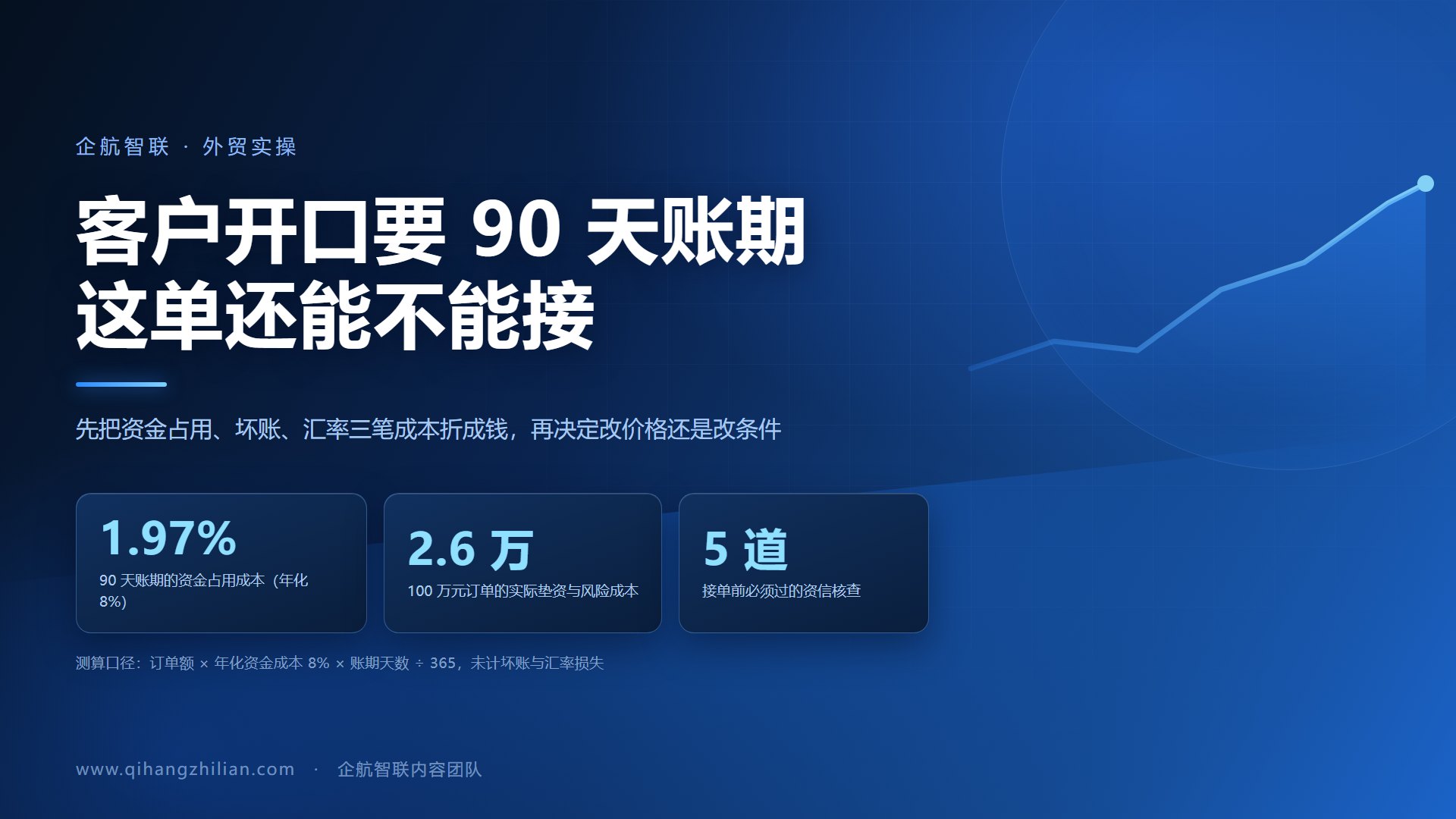
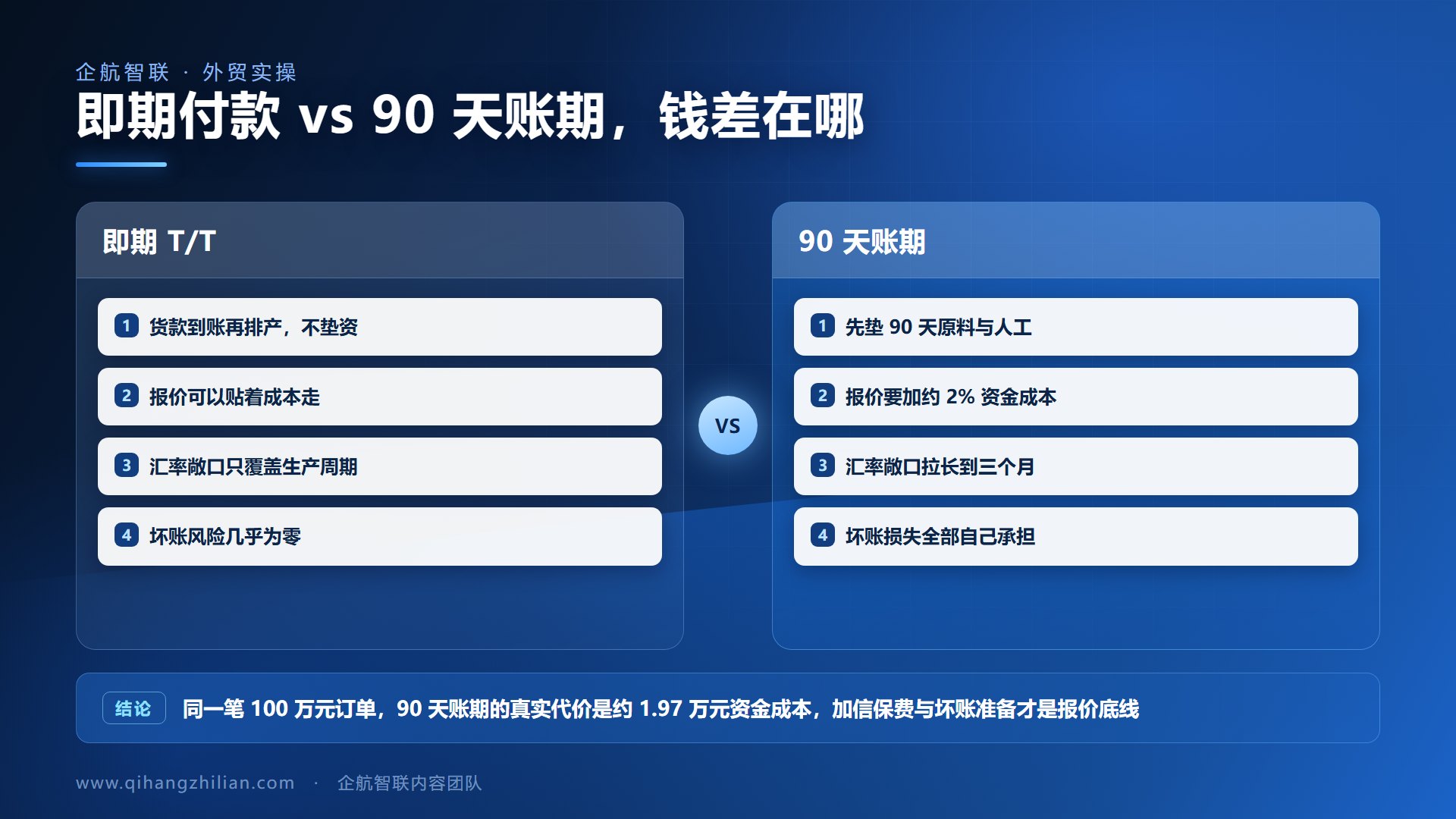
Core Conclusion: A 90-day payment term isn't "delayed payment" – it's lending money to your customer for 90 days. With an annualized capital cost of 8%, for a 1 million yuan order, you need to advance approximately 19,700 yuan for 90 days. Adding export credit insurance and bad debt provisions, the real cost is around 26,000 yuan, equivalent to 13% of your gross margin being consumed. Whether to accept such terms depends not on what the customer says, but on three factors: payment records over the past 12 months, the proportion of this order to your cash flow, and whether you have tools to transfer the risk. If you can't pass two of these three factors, change the terms, not the price.
Exchange rates are also fluctuating: On November 16, the central parity rate of the Chinese yuan against the US dollar was 6.7141, up 11 basis points from the previous trading day (China News Network). The longer the payment term, the greater your exchange rate exposure – no one can lock in the exchange rate 90 days from now. Therefore, payment term negotiations are never just about payment timing; they involve three calculations together: capital, bad debt, and exchange rates.
I. What Payment Terms Really Cost: Three Costs, Not One
Most factories calculate payment terms with just one sentence: "Delayed payment of 90 days, slower turnover." This sentence combines three costs into one, making it impossible to determine whether to accept the terms.
First is capital occupation. Raw materials require cash payment, wages are paid monthly, and tax rebates wait for several months after customs declaration, yet payment for goods is delayed by 90 days. During these 90 days, you are using your own money or bank loans to cover production for your customer. This capital has a cost – an 8% annualized rate is relatively common in manufacturing, encompassing bank loans, bill discounting, and the opportunity cost of shareholders' capital.
Second is bad debt and overdue payments. Once payment terms are extended, you lose control over payment timing. Customer business deterioration, foreign exchange controls, or even just a change in procurement负责人 can turn 90 days into 180 days. This cost cannot be offset by "our customers are all creditworthy" – it must be priced based on historical overdue records and insurance costs.
Third is exchange rates. For an order with immediate payment, the time between quotation and receipt of payment may only span one production cycle; for a 90-day payment term, there's a six-month gap between quotation and receipt. If the exchange rate fluctuates by 2% in between, a $100,000 order results in a 14,000 yuan difference, directly consuming the net profit of that order.
II. Converting Payment Terms to Money: A Direct Formula
The formula is simple: Capital Occupation Cost = Order Amount × Annualized Capital Cost × Payment Term Days ÷ 365. Below, we convert common payment terms to money at an 8% annualized rate, so you can directly compare with your gross margin:
| Payment Term | Capital Occupation Cost Rate | Amount to Advance for 1 Million Yuan Order | Equivalent to Consuming How Much Gross Margin (at 15% gross margin) |
|---|---|---|---|
| 30 days | 0.66% | 6,600 yuan | 4.4% |
| 60 days | 1.32% | 13,200 yuan | 8.8% |
| 90 days | 1.97% | 19,700 yuan | 13.1% |
| 120 days | 2.63% | 26,300 yuan | 17.5% |
| 180 days | 3.95% | 39,500 yuan | 26.3% |
The most important column in this table is the last one. A 90-day payment term consumes 13% of your gross margin, while 180 days consumes 26% – if your net profit margin on this order is already 8%, a 180-day payment term means not just less profit, but a loss. The standard is simple: Payment term costs within 30% of gross margin are negotiable; exceeding 30% requires changing the terms.
III. Five Essential Checks Before Accepting an Order
Whether to offer payment terms depends on passing these five checks one by one. If you pass all five, payment terms can be negotiated; if you pass three or fewer, only short terms plus deposit can be offered; if you pass fewer than three, don't offer payment terms – it's better to lose the order.
- Obtain a buyer's credit report, focusing on litigation records, any public records of supplier defaults, and consistency between registered and paid-up capital.
- Request payment vouchers or bank statement summaries from the customer for payments to Chinese suppliers over the past 12 months, checking average payment days rather than verbal commitments.
- Calculate what percentage of the gross margin this order's payment term cost represents, include it in the quotation's cost sheet, don't just calculate it mentally.
- Confirm foreign exchange controls and approval cycles for fund transfers in the customer's country – some markets require one or two months just for approval, extending the payment term further.
- Confirm you have available risk transfer tools: export credit insurance limits, issuing bank's credit for letters of credit, or factoring company quotes – you need at least one of these three.
IV. When Clients Insist on 90 Days Payment Terms: Three Negotiation Approaches
Payment terms are negotiable, but the negotiation isn't about "whether to give them," but "what to exchange for them." Try the following three approaches in order, starting with the most easily accepted:
| Approach | How to Propose to Client | Impact on You |
|---|---|---|
| Deposit Extended Terms | 30% deposit for the first order with balance due 90 days after shipment, then negotiate full terms for subsequent orders | Financing requirement reduced from 100% to 70%, making trial order risk manageable |
| Terms for Price | 2% discount for immediate payment, original price for 90-day terms | Explicitly pricing the financing cost, allowing clients to choose based on their willingness to pay interest |
| Terms for Tools | Terms can be provided with a confirmed irrevocable L/C or export credit insurance, with premium shared equally | Transferring bad debt risk to banks or insurers with predictable costs |
The second approach is the most practical. It transforms "payment terms" from a personal favor to a pricing issue: clients either pay early for a discount or pay later with interest, rather than you making unilateral concessions.
V. Ready-to-Use English Phrasing for Clients
The following text can be sent as-is, only replacing content in brackets:
Dear [Name],
Thank you for your interest in placing the [product] order. We are glad to support you with payment terms, and I would like to explain how we structure them so that both sides can plan with confidence.
Our standard terms for a first order are 30% deposit with the balance against the bill of lading. For repeat orders we can extend to 60 or 90 days from shipment. Please note that our pricing assumes payment at sight; a 90-day term carries an additional financing cost of approximately 2% of the order value, which we normally absorb for long-term partners after the first two shipments.
If 90 days is essential for your cash flow on this first order, we can offer it with one of the following: a confirmed irrevocable L/C at sight, or credit insurance with the premium shared equally. Both options protect your schedule as much as ours, and neither delays your shipment.
Could you let me know which option works best, and share your company registration document so we can complete our standard credit check? It usually takes three working days.
Best regards,
[Your name]
The value of this approach is that it doesn't reject the client's request but breaks down "payment terms" into two negotiable variables: "price" and "tools," while naturally introducing the credit check requirement—making it easier to move forward than a direct refusal of "we don't offer terms for first orders."
VI. Frequently Asked Questions
1. For publicly traded clients insisting on 90-day terms, is a credit check still necessary?
Yes, but with different focus. A public company's solvency is generally not the issue; the problem lies in their processes: their payment terms are locked in their procurement system. If your invoice is delayed by a week, payment extends by another term cycle. Therefore, check their reconciliation and payment nodes rather than their financial statements.
2. How much does export credit insurance cover, and who pays the premium?
Common coverage ranges from 70% to 90% of losses, subject to the insurer's assessment and policy terms. Premiums are priced based on export value and buyer's country risk. Industry practice often involves splitting the premium equally between buyer and seller, or factoring it into the quotation—key is not to bear the full cost yourself.
3. When clients delay payment until 120 days, what can be done beyond sending reminders?
First, stop and calculate: did you continue shipping during their delay period? Payment terms aren't a one-time concession but can be reclaimed per order. The approach is to revert to immediate payment terms for subsequent shipments while issuing a separate reconciliation statement for the overdue portion and requiring written confirmation—this documented debt provides basis for insurance claims or legal proceedings later.
VII. Conclusion
The real difficulty in negotiating payment terms isn't the numbers, but transforming "I trust you" into "how much each of us will bear." Converting financing costs into money, transferring risk to tools, and incorporating conditions into contracts—once these three things are done, 90-day terms become more than a simple yes-or-no decision.
Qihang Zhilian Content Team · Empowering Chinese Manufacturing to Set Sail Globally · For customized export acquisition solutions, call 180-0327-6609