Core conclusions:In this case, Xiamen, a food export company, directly developed 15 Southeast Asian distributors within one year, with an annual export value of 1.8 million yuan, a customer repurchase rate of 50%, and an overall profit margin increased by 35% compared with when it was represented by a foreign trade company.
1. Customer background
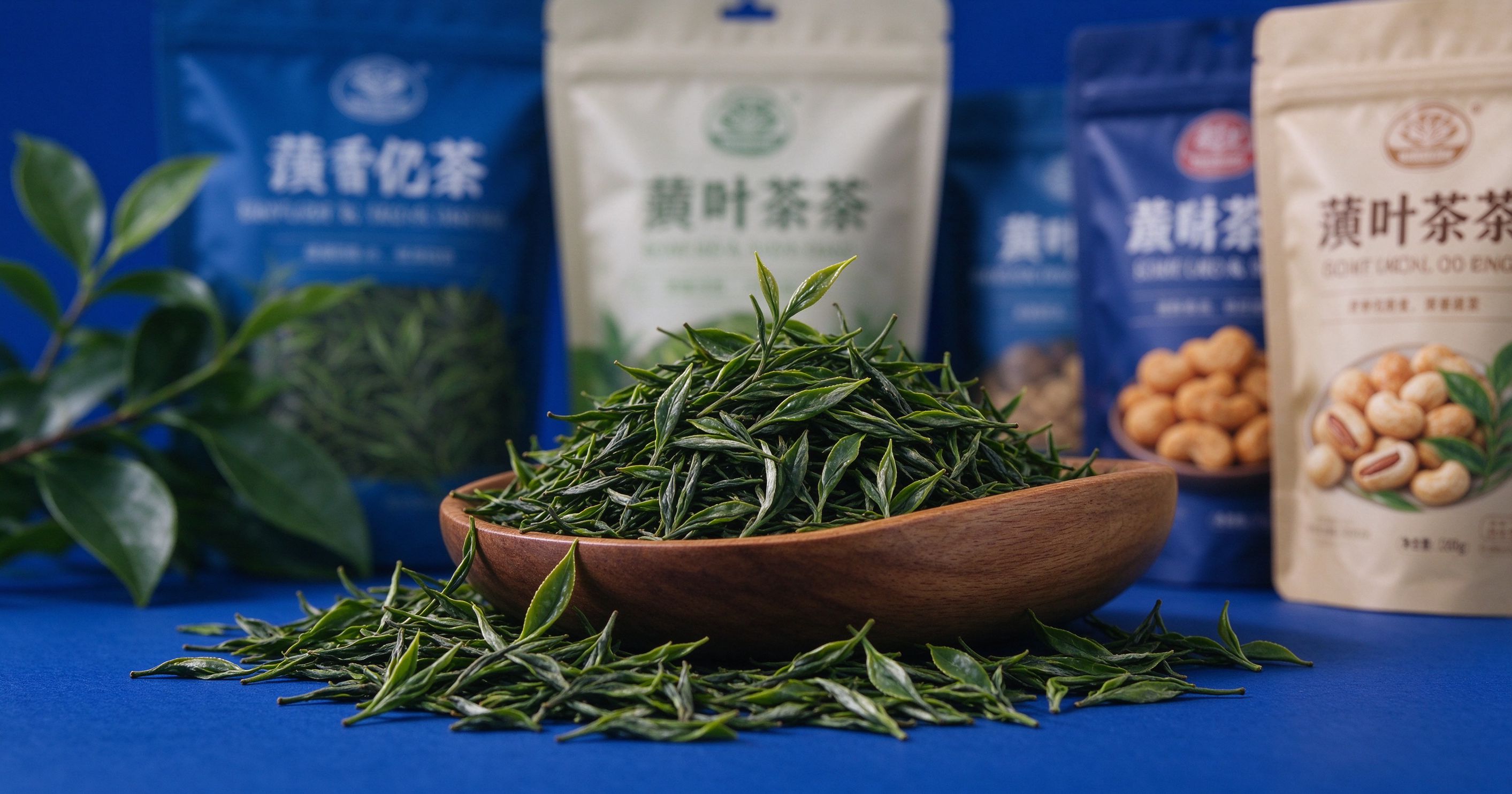
A food export enterprise in Xiamen, Fujian Province, mainly specializes in snack food and tea. It has its own processing plant and mature formula. The products have been produced in the domestic market for many years, and their taste and quality are relatively stable. In the past, all its export business was handed over to foreign trade companies as agents. The factory was only responsible for producing according to orders and did not participate in customer development, quotation or brand exposure.
This model has been in place for a long time, and the drawbacks are very clear: the pricing power lies in the hands of the middleman, and the factory only gets processing profits. The factory has no idea who the customer is, where the customer is sold, and at what price; once the middleman changes suppliers, the order will return to zero. The company hopes to bypass intermediate links, directly connect with dealers in Southeast Asia, and hold customer relationships and brands in its own hands.
On the product line, this factory focuses on several casual snacks with stable flavors and two oolong teas with local characteristics. It has a certain basis for repurchase in China, and the packaging has been iterated in two rounds. The factory's production capacity flexibility is good and can undertake customized packaging needs for small and medium-sized batches. This is actually very attractive in Southeast Asian channels, but it has never been made clear to the public in the past.
2. Problem diagnosis: Why does the original path fail?
- The channel relationship is not in my hands.The foreign trade company controls the customer list and negotiation process, and the factory is always in a passive position to receive orders, and the profit margin is suppressed relatively thin.
- Food going to sea is a triple threshold.Food exports are also subject to triple constraints on channels, certification and taste: dealers need to see whether certification is complete, supervision depends on whether labels and ingredients are compliant, and consumers need to see whether tastes and packaging conform to local customs. If any link is not cleared, the goods will not be available.
- A set of English materials cannot be reached in Southeast Asia.Southeast Asia is a multi-lingual, multi-religious and multi-regulatory market. Dealers in Thailand, Malaysia, and Indonesia use a lot of local languages in daily business communication. It is difficult for a pure English investment promotion material to spread through local channels.
- Food safety and certification information is incomplete.Before deciding to purchase goods, local distributors usually require information such as ingredient lists, shelf life, production qualifications, and relevant food compliance certificates, and the local language version is required. This factory only had Chinese information at that time.
To put it bluntly, the factory has products, but it lacks a set of localized materials that can be understood, trusted and sold by local dealers.
3. What have we done?
- Data screening of Southeast Asian food distributors.Focusing on the three key markets of Thailand, Malaysia and Indonesia, we sorted out the list of importers, wholesalers, supermarket suppliers and e-commerce channel providers of snack food and tea, and ranked them according to channel type and procurement scale.
- Multilingual content marketing.Organize product introduction, selling points, packaging display and cooperation policies into three versions in English, Thai and Malay for use in email, social media and investment promotion pages.
- Line and WhatsApp automated marketing.Customers in Southeast Asia are accustomed to using Line to communicate with WhatsApp. We have built an automatic response and regular push mechanism to reach customers with new products, quotations and promotional information at a rhythm, and inquiries are no longer waiting.
- Localization of food certification data.Organize ingredients, shelf life, production qualifications, packaging specifications, storage and transportation conditions and other information into a standardized multi-lingual document package, making it convenient for customers to directly use it for internal review and local reporting.
- Channel stratification policy.Different cooperation conditions are designed according to the dealer's channel type and purchase volume, including sample handling methods, packaging customization thresholds and regional division principles, so that customers can see a clear cooperation path during the first communication.
4. Execution rhythm
Month 1: Data and positioning
Sort out the product line, clarify the main promotion categories and price bands, complete the multilingual information package and investment promotion page, and clearly explain "what can be provided, what conditions, and how to cooperate."
Month 2: List and content
The screening and grading of dealer lists in three markets have been completed, multilingual content has begun to be rolled out in various channels, and the first batch of development letters and social media contacts have been issued one after another.
Month 3: Development and sample delivery
Handle and respond to customer quotations and sample requests, arrange sample delivery and taste feedback collection. In this case, the first batch of dealers successively confirmed cooperation after sending samples.
Months 4-12: Laying channels and repurchase
Provide good services to dealers that have already cooperated with, and enhance repurchase through order return rhythm, seasonal new products and display support; at the same time, use old customer introductions to spread to other channels in the same market.
V. Outcome data
During the 1-year period, the observation results of this case are as follows:
- Developing Southeast Asian dealers:the 15(Mainly in Thailand, Malaysia and Indonesia)
- Customer repurchase rate:50%
- Annual exports:1.8 million yuan
- Profit margin: increased compared to when using foreign trade companies as agents35%
- Channel structure: From shipping from a single agent to parallel distribution by multiple dealers
6. Which factories can this method be replicated to?
This method is applicable to food and consumer goods factories that "have products and certifications, but the lifeline of the channel is in the hands of middlemen." Typical categories include snack food, nuts and nuts, condiments, tea, canned food, prepared vegetables, local specialties, as well as some daily chemical and household consumer goods.
It should be reminded that the cycle for food to go to sea is generally longer than that for industrial products, and certification, labeling, storage and transportation will lengthen the timeline. Therefore, it is more suitable for factories that have the patience to build long-term channels, rather than trade-based teams that want to see quickly in the short term.
To judge whether you are suitable for this path, you can look at three points: whether the product has a stable taste and replicable packaging standards; whether the factory already has the qualifications and test reports required for export; whether it is willing to accept customized packaging proposed by dealers. and regional protection requirements. All three points are passed, and the income from directly connecting dealers is usually more substantial than continuing to do agency processing.
7. Common questions
Q: Is it more troublesome to bypass foreign trade companies and export yourself?
A: It really requires more investment in the early stage, which requires preparing materials, processing certification, docking logistics and settlement. But in exchange, customer relationships and pricing power are in their own hands. In this case, the profit margin has increased by 35% compared with when doing agency processing.
Q: With so many countries in Southeast Asia, which one should I do first?
A: Thailand, Malaysia, and Indonesia are preferred for this case. The judgment is based on channel foundation, acceptance of product taste and logistics convenience. The specific one to do first must also be judged based on the taste and price of one's own products.
Q: What do food distributors value most?
A: Judging from the communication records of this case, the dealer's order of attention is generally: whether the certification and information are complete, whether the taste is in line with the local area, whether the packaging and shelf life are suitable for the channel, whether the price has profit margin, and whether the supply is stable. If the first two items are not passed, there is basically no need to talk about the rest.
