Core conclusions:A metal products factory in Tangshan used an AI foreign trade SDR robot to gather clues from overseas construction companies and steel structure buyers. In half a year, it achieved an average monthly export volume of 200,000 yuan from zero foreign trade and 12 overseas customers.
1. Customer background
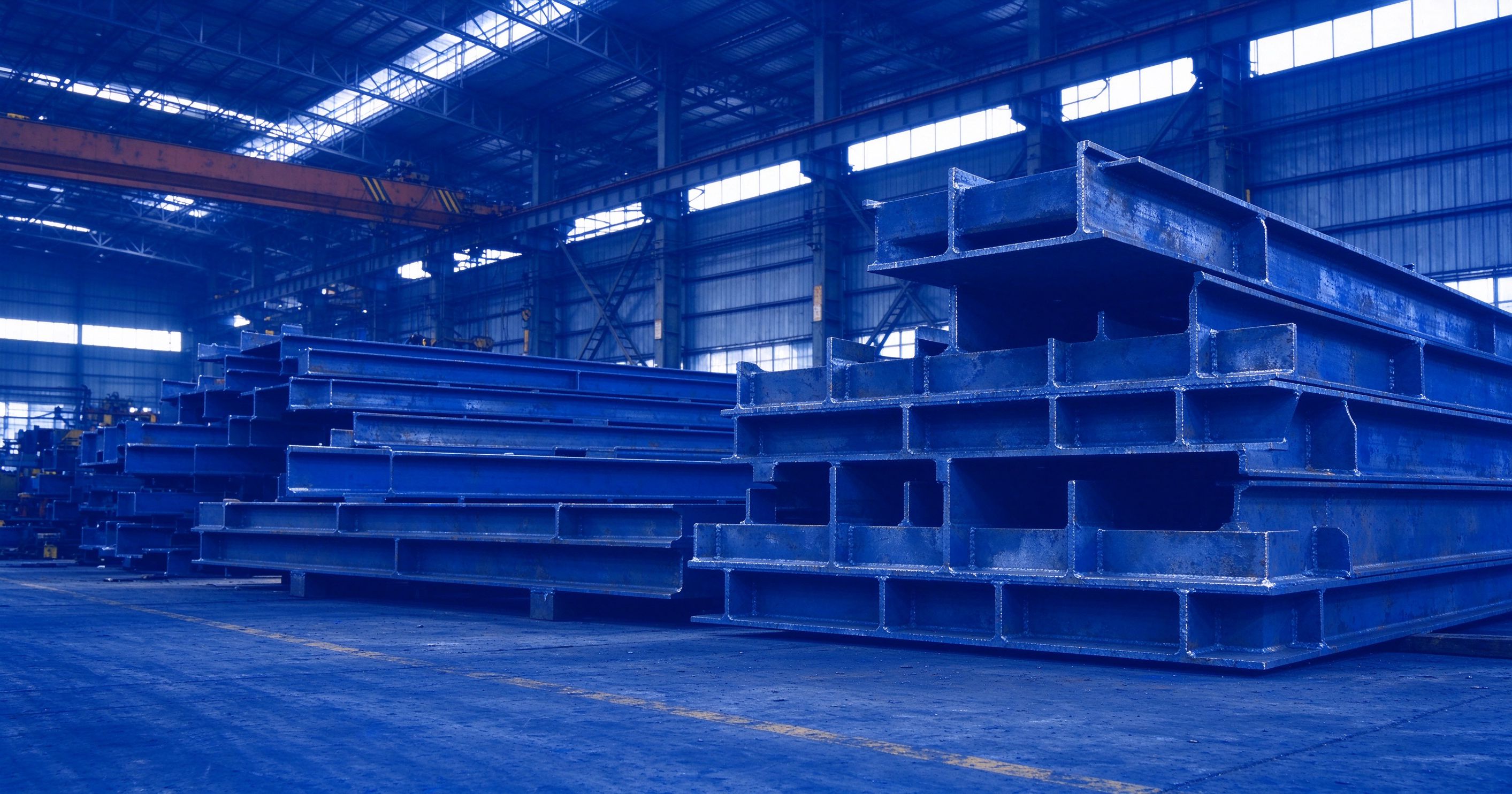
A metal products factory in Tangshan, Hebei Province mainly specializes in steel structural parts and hardware. It has the processing and assembly capabilities of large steel structures. The factory area is large and has complete lifting, cutting and welding equipment. It has also done some domestic projects of considerable size. Over the past years, almost all factory orders have come from domestic infrastructure projects, including factories, venues, and warehousing buildings. After the pace of domestic infrastructure slowed down, orders fluctuated greatly, the collection cycle also lengthened, and the factory's cash flow began to tighten. The boss began to consider doing steel structure construction projects in overseas markets, especially Southeast Asia, the Middle East, and Africa. The demand for factory and warehousing construction in these areas is growing, and there is a real demand for cost-effective China steel structures. However, no one in the factory has done foreign trade, and they have to learn which trade term to use for quotations. This is a typical example of "no shortage of production capacity and zero foreign trade."
2. Problem diagnosis: Why does the original path fail?
Steel structures do foreign trade, which is completely different from other categories.
First, customers are not end consumers, but construction companies, engineering contractors, and steel structure purchasers. They are typical B2B large orders and long-term businesses. An order may be negotiated for several months, and no one has the patience to rely on scattered letters to touch it.
Second, customers are scattered on the map, and there is demand in Southeast Asia, the Middle East, Africa, and South America. Relying on manual search one by one is extremely inefficient. The salesperson may only find a few effective clues in one day, and the cost is ridiculously high.
Third, what these customers care most about is production capacity and performance ability, whether they can deliver large-tonnage components on time, and whether there are corresponding certifications and engineering cases. Once these trusts are established, customers will be very sticky.
Fourth, the factory started completely from scratch. There is no CRM. Customer information is scattered on the salesperson's mobile phones and personal WeChat. As soon as people leave, customers are lost, and the clues that have been hard-earned cannot be left behind.
Therefore, the question is not "whether the product can be sold", but "how to systematically find and control these large overseas customers" to turn accidental transactions into a replicable process.
3. What have we done?
Focusing on the main line of "systematically finding customers and systematically managing customers", four sets of actions were taken:
- AI foreign trade SDR robot deployment. Let the system automatically find construction companies, engineering contractors and steel structure buyers around the world, automatically collect clues by region and project type, instead of manual search one by one, and liberate salesmen from manual work.
- Localization of English product materials. Organize the factory's production capacity, equipment list, processing capacity, and certification into English, highlighting "large-tonnage components" and "engineering performance" capabilities, allowing overseas customers to see the factory's hard power at a glance.
- CRM customer management system deployment. All customer clues and communication records are uniformly deposited into the system, and the salesperson can follow up with evidence. Personnel changes will not affect customer assets, and "customers follow people" will no longer occur.
- English version of Independence Station. Moving factory production capacity, equipment photos, and engineering cases onto the website allows overseas customers to establish basic trust before contacting them and shorten the cost of trust for the first communication.
4. Execution rhythm
Month 1: Build the system from scratch
Deploy SDR robots and CRM, organize English materials, and launch the English version of the independent website. This month's output is "infrastructure", not orders yet, but the efficiency in the future comes from here. The foundation cannot be laid firmly and the future cannot run fast.
Month 2 to Month 3: Clues Gathering and First Contact
SDR robots continue to gather clues from overseas construction companies and steel structure buyers, and salesmen follow up by region. The first batch of valid inquiries appeared in the third month, and the factory began to learn the process of quotation, proofing and cross-time zone communication.
Month 4 to Month 6: Order placement and stable output
After the first order was closed, the team gradually became familiar with the communication and performance rhythm of overseas customers. Orders began to roll and customers introduced each other. By the sixth month, a stable output of an average monthly export volume of 200,000 yuan was achieved, with a total of 12 overseas customers.
V. Outcome data
Within half a year of this case:
- Average monthly export volume from 0 foreign trade:200,000 Yuan
- Overseas customers:the 12
- Team costs:of 1Salesman can operate
- Proportion of overseas revenue:20%
6. Which factories can this method be replicated to?
It is suitable for factories where "the products are large-scale industrial products, the customers are engineering or purchasers, and have no previous foundation for foreign trade", such as steel structures, metal products, building materials, large-scale equipment, engineering accessories, etc. The judgment criteria are: products win by production capacity and engineering cases, the number of customers does not need to be large but the value of each individual is high, and the factory is willing to systematize the process of finding customers first. If the factory only wants to try water and is unwilling to invest in infrastructure construction, this method will be difficult to run because its premise is the precipitation of processes and data.
7. Common questions
Q: Is the SDR robot just a group sending software?
A: No. The group-sending software only manages distribution, while the SDR robot manages "finding, screening, layering, and continuous advancement." It first helps the factory find qualified overseas customers, and then ranks them according to the degree of matching. The salesperson follows the screened clues rather than sending letters aimlessly. The efficiency and quality are different.
Q: Can one salesperson really carry out the entire overseas business?
A: In this case, the early customer search and clue layering are completed by the system, and the salesperson mainly does communication and follow-up, so one person can run. However, as the number of customers increases, it is recommended to gradually replenish manpower, especially in the after-sales and performance aspects, to avoid the impact of insufficient manpower on the customer experience.
Q: Is this normal to achieve an average of 200,000 per month in half a year?
A: This is the specific rhythm of this case, which is directly related to the product category, target market, and team investment. Steel structures belong to a category with high single value and long cycle. They require time to build infrastructure in the early stage. The real results are often after the third month. The rhythm of different factories will be different, and it is not recommended to copy the timetable.
