Core conclusions:Used by a precision parts processing factory in Suzhoucustoms dataThe AI development letter targeted North American aerospace and medical device buyers, achieving an average of 30 precise inquiries per month in three months, and closing 5 long-term customers.
1. Customer background
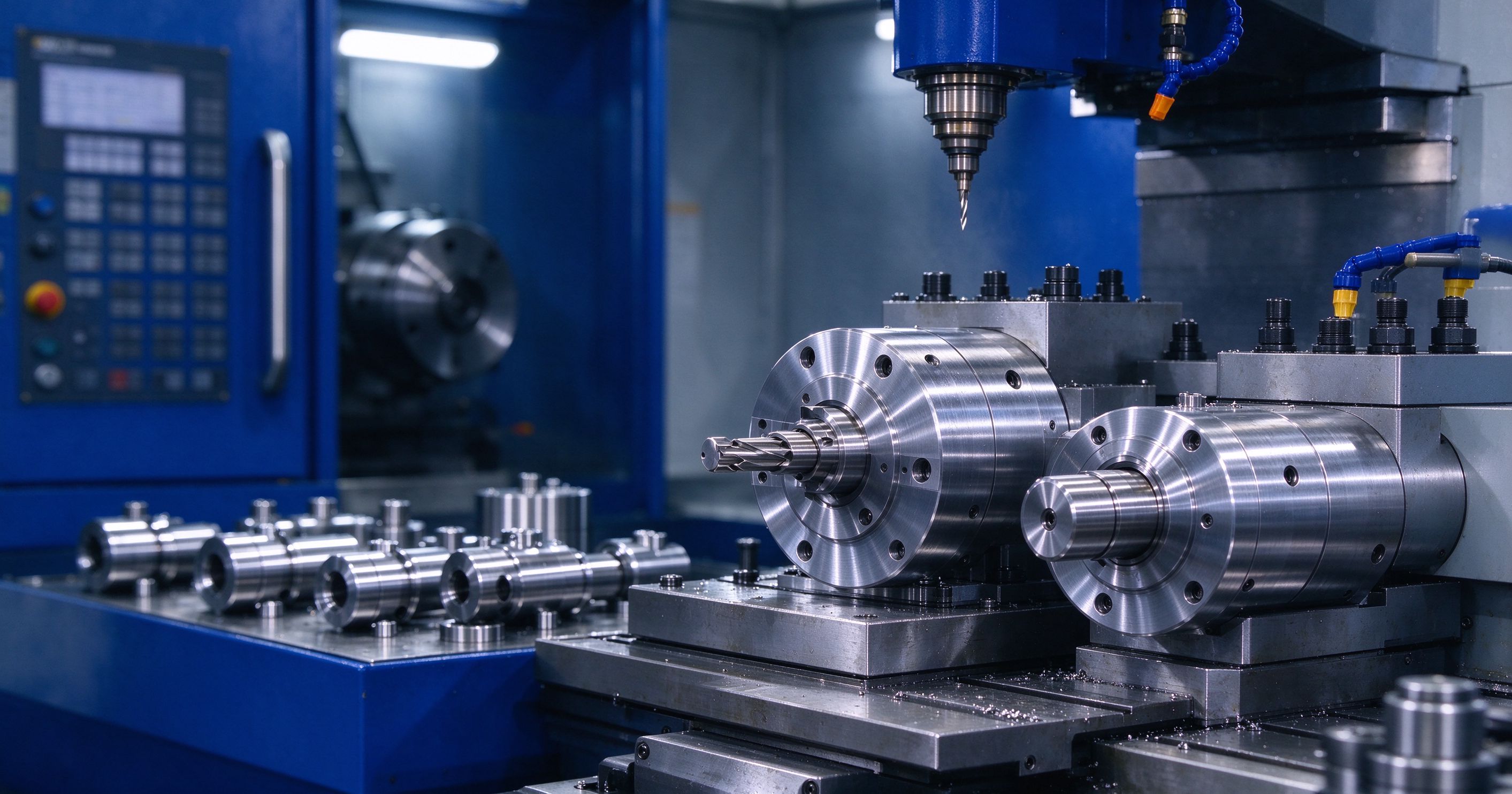
A precision parts processing factory in Suzhou, Jiangsu Province was established around 2016. The factory is located in the precision manufacturing gathering area around Suzhou Industrial Park. It mainly specializes in CNC precision machining, hardware precision parts, and non-standard parts. The equipment is mainly three-axis and four-axis machining centers, and some processes can achieve micron precision. The service target is domestic high-end manufacturing. The factory is characterized by stable precision, accurate delivery, willingness to take on small batches of difficult work, and has some reputation in the circle. However, the customer structure is single, and they are basically in China. Orders are greatly affected by the prosperity of the domestic manufacturing industry. When customers in an industry shrink, the factory's capacity utilization rate drops significantly. The factory judged that the aerospace and medical device supporting markets in North America have high requirements for precision and high unit prices, which is a direction worth doing in the long term. However, the team is not familiar with the rules, certification requirements, and communication habits of the North American procurement system, and does not have ready-made customer resources. It is classified as "capable but no connections."
2. Problem diagnosis: Why does the original path fail?
In doing foreign trade in the precision processing industry, the difficulty lies not in the products, but in "finding the right people."
First, the procurement chain of aerospace and medical devices in North America is long. Procurement engineers, quality engineers, and project managers each manage one stall. An opening letter sent to the company's general mailbox is basically equivalent to a stone sinking into the sea. If you can't find the right person, no matter how good the content is, it will be useless.
Second, such customers are extremely sensitive to certification. If qualifications such as ISO9001 and AS9100 are not proactively and clearly presented, customers will not even be interested in making inquiries. Moreover, different customers have different requirements for certification versions and validity periods.
Third, drawing communication is a hard threshold. There is a difference between the labeling method used by China factories and the drawing specifications of North American customers. Inaccurate translation will directly lead to incorrect quotation or even wrong parts, and the losses can only be borne by you.
Fourth, LinkedIn is an important social center for purchasing engineers in North America, but the factory had no operation at all before and had no professional image that could be searched for.
Fifth, customers are scattered and hidden. Buyers that meet the factory's capabilities may be scattered among tens of thousands of medical device and aerospace companies, relying on manual search one by one, making it almost impossible to cover them.
To sum up: The portrait of the target customer is very clear, but the factory lacks a mechanism to "accurately touch and add professional endorsement".
3. What have we done?
Four sets of actions were performed around the two keywords of "find the right person and talk the conversation":
- North American buyer data screening. Focusing on medical equipment and aerospace supporting facilities, about 20,000 companies with purchasing behaviors were selected from customs data and industry directories, and then stratified according to product matching, procurement frequency, and enterprise size, and the customers who are most likely to make deals were ranked first.
- AI English Development Letter. It is not a group template, but combines the customer's product line to highlight the factory's precision capabilities and certification qualifications (ISO9001, AS9100), and puts "you can do the work I need" at the forefront, so that purchasing engineers can see the key points at a glance.
- Multilingual translation of technical drawings. Establish a corresponding table for drawing translation and labeling specifications, unify the technical expressions in Chinese and English, and avoid quotation errors and rework caused by understanding deviations.
- LinkedIn targeted marketing. Connect with purchasing engineers and quality engineers in North America, build trust with technical content and process cases rather than sales rhetoric, so that customers have seen the factory before receiving the email.
4. Execution rhythm
Month 1: Customer stratification and speech polishing
Complete the screening and stratification of customer data, and produce the first batch of development letter content. First test the response rate on a small and medium scale of medical device customers, repeatedly modify the speech, and place the most critical accuracy and certification information in the position where customers see first.
Month 2: Batch reach in parallel with LinkedIn
Development letters are automatically executed according to a 7 to 14-day follow-up sequence, and content is added and posted on LinkedIn simultaneously. Enquiries began to start this month, but the quality of customers is uneven. The key point is to thoroughly explain "accuracy certification" and "proofing ability" to screen out mismatch customers as soon as possible to prevent salesmen from wasting time on ineffective communication.
Month 3: Enquiries to orders
Classify inquiries by project stage, and give priority to customers with clear drawings and delivery dates. Prepare complete quality documents for aerospace customers and cooperate with medical customers to conduct sample testing. At this stage, the factory's engineering staff began to directly intervene in communication, and the quotation accuracy and response speed were significantly improved. This month, a stable output of 30 precise inquiries per month was achieved.
V. Outcome data
Within 3 months of this case:
- Monthly accurate inquiries:30 articles
- Long-term customers:of 5
- First order amount:$0.18 million
- Customer repurchase rate:60%
6. Which factories can this method be replicated to?
It is suitable for industrial products factories with "high technical content and customer decisions rely on qualifications and precision", such as precision machining, molds, special materials, industrial parts, testing equipment, etc. The judgment criterion is: the product has clear technical parameters and certification thresholds, and the customer does not rely on price to screen suppliers, but on ability and qualifications; at the same time, the product has a certain irreplaceability. Once the customer passes the certification, the cost of replacing the supplier is high. Conversely, if it is a category that is purely volume-based and relies on price competition, the cost performance of this method will be lower, and the focus should be on production capacity and delivery time.
7. Common questions
Q: Will customs data screening customers involve privacy issues?
A: We use public customs import and export data and corporate public information to determine whether a company has procurement behavior and product matching. It does not involve personal privacy data, and will not use the data for purposes other than the case.
Q: We don't have AS9100 certification. Can we be aerospace customers?
A: You can start from customers with relatively flexible certification requirements such as medical devices and industrial equipment, build trust with existing qualifications and proofing capabilities, and then gradually extend to areas with higher requirements. Certification can be gradually supplemented according to customer needs, without having to pursue a large and comprehensive approach from the beginning.
Q: Why spend energy on LinkedIn instead of sending emails directly?
A: Procurement engineers in North America are more accustomed to viewing the professional image of suppliers on LinkedIn. Email is a "knock on the door" and LinkedIn is an "endorsement". When the two work together, customers will have a significantly different trust after opening the email, and the response rate will be higher.
