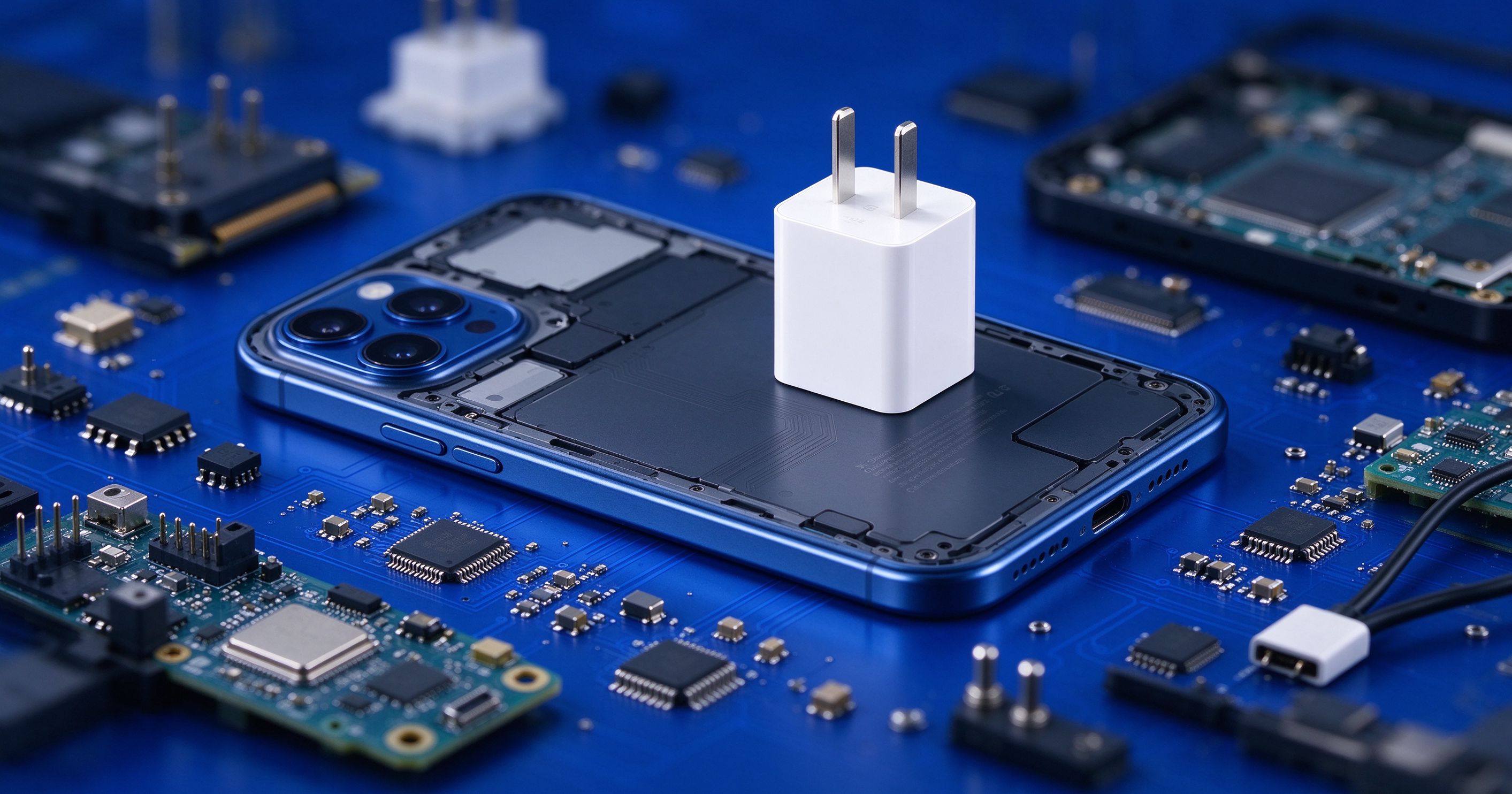
Core conclusions:A 3C electronic parts factory in Dongguan has turned ten years of OEM production capacity into AI-readable trust assets, directly connecting with 12 overseas brand customers in half a year. The order volume increased by 300%, and the profit of single product increased by 50%.
1. Customer background
A 3C electronic parts factory in Dongguan, Guangdong Province was established around 2015. It rented two factories in Humen, Dongguan. It mainly engaged in phone case, charger case, and data line interface parts. It has been an OEM for ten years. The factory has a complete chain of injection molding, UV printing, and assembly, with a monthly production capacity of millions of pieces. The customers are mainly domestic white-brand e-commerce companies and several intermediate traders. The product quality has stood the test and the yield has been stable for a long time. However, the factory has never had a brand itself, nor has it directly faced the terminal brand. In terms of profit structure, the ex-factory price of a phone case is pushed to a few cents, leaving not much after deducting raw materials and labor. After changing hands layer by layer, the selling price of overseas terminals may be more than ten times the ex-factory price. At the beginning of 2025, the boss decided to no longer just make white cards, but wanted to directly connect with overseas brand customers and make profits. The problem is that no one in the team has done foreign trade, and they don't know how overseas brands find suppliers for their purchases. The boss himself tried to register an account on an overseas B2B platform and sent dozens of English development letters sporadically, but because there were no brand endorsements or online traces, there was almost no response.
2. Problem diagnosis: Why does the original path fail?
After we intervened, we did four things: look at the past, look at colleagues, look at customers, and look at ourselves.
First, look at the past. Almost all of the factory's ten-year transactions have come from referrals from old customers and domestic e-commerce, and there are zero overseas orders. There are no independent stations, no systematic English materials, and no public information that can be searched. Overseas customers want to verify online whether this factory is reliable, but they cannot find any basis.
Second, look at your peers. The competition for similar 3C parts factories in Dongguan on overseas platforms has become fierce. The quotations are lower than the other. By relying on low-price bidding, profits are getting thinner and thinner. If new customers first see prices that are pushed to extremely low prices, the factory can only be squeezed repeatedly in terms of price.
Third, look at customers. When niche overseas 3C brands find suppliers, the first step is often not to visit the B2B platform, but to directly ask "Who can make a customized phone case" in search engines and AI assistants. In the AI response at that time, there was almost no information about this factory. All they found were colleagues who had done content construction earlier.
Fourth, look at yourself. The factory's expression still stays in the language of the workshop, which talks about mold accuracy, injection molding parameters, and yield figures. What brand customers care about is whether they can make samples, whether they can order in small batches, and whether they can cooperate with changes. The two sides are not talking about the same thing, and communication is naturally inefficient.
The conclusion is clear: what the factory lacks is not production capacity, but an entrance to be "found" and "trusted." Production capacity is hidden in the workshop and cannot be seen by customers.
3. What have we done?
Focusing on the main line of "letting AI and search engines know this factory first", five sets of actions were taken:
- GEO optimization. Break down the factory's capabilities into Q & A units that are easy to understand by AI: whether it can be customized, how much the minimum order quantity is, how long the proofing cycle is, what are the certifications, and how big the production capacity is. When customers search for keywords such as custom phone case manufacturer China in ChatGPT, factory information can be accurately mentioned.
- High-end display at Independent Station. Instead of making a product catalog page, it is reconfiguring around OEM/ODM solutions. The first screen clearly explains what the factory does, who it serves, and what level of magnitude it can receive, and translates the "factory language" into an expression familiar to brand customers.
- Product 3D display page and multilingual parameter table. For products such as phone case and charger case, customers care most about the material, thickness, feel, and printing process. Use 3D display to explain the details clearly, and the parameter list is made in English, German and Spanish, so that customers can make judgments without repeated questioning.
- Structured data tags. Mark the company name, main products, certifications, and contact information with structured data to help AI and search engines accurately capture company information rather than guessing. This is the basis for allowing AI to "speak the dialogue."
- Trust material reinforcement. Organize workshop equipment photos, quality inspection procedures, and production capacity data into content that can be displayed externally, filling the gap where there was no credible material online in the past.
4. Execution rhythm
Month 1:"Translate" the factory into something machines can read
Sort out product line and production capacity data, build an independent station framework, complete the English content of the core page, and make structured marks for corporate information. Enquiries are not the goal this month. The focus is to let factories "exist" online first, so that AI and search engines can have something to catch.
Month 2: Continue to feed content and let AI start quoting
Focusing on topics such as customized phone case, charger case, and UV printing process, we will continue to produce English content; we will simultaneously lay the foundation in LinkedIn and industry forums. The first batch of interviews from AI citations began to appear at the end of the month. Although the volume was not large, the visitors 'intentions were clear.
Month 3 to Month 6: Inquiry conversion and customer screening
After inquiries gradually came in, the focus shifted from "pulling traffic" to "screening customers". Enquiries are divided into three categories according to brand side, trader, and individual, and the brand side will give priority to follow-up. For niche 3C brands in Europe and the United States, prepare a complete information package of proofing capabilities, certification documents, and production capacity certificates to shorten the decision-making cycle of the other party. In recent months, for the first time, the factory has truly sat at the same negotiating table as overseas brands.
V. Outcome data
Within half a year of this case:
- Directly connect with overseas brand customers:the 12, among themof 3It is a niche 3C brand in Europe and America
- Order volume growth:300%
- Profit per product: improvement50%
- Proportion of AI source inquiries:35%
6. Which factories can this method be replicated to?
This method is most suitable for manufacturing factories with "production capacity, quality, but no brand, and no online entrance", especially for products such as 3C parts, consumer electronics peripherals, and small home appliances with high standardization and customer decision-making relies on parameter comparison. industry. There are three criteria for judgment: first, the product can be clearly described into parameters and processes; second, the factory has a stable production capacity and basic quality control system; third, the boss is willing to do a solid job in "letting customers find themselves" first, rather than rushing to invest in advertising and buy traffic. Conversely, if the product is highly non-standard and every order must be designed from scratch, the difficulty of content standardization will increase significantly, and the problem of product sorting needs to be solved first.
7. Common questions
Q: What is the difference between GEO optimization and traditional SEO?
A: Traditional SEO competes for the ranking position of search engines, while GEO competes for whether you are mentioned in the AI answer. When customers started using ChatGPT and Perplexity to ask "Who makes a customized phone case," the factory accurately mentioned by AI was equivalent to having an additional salesperson online 24 hours a day. The two are not in conflict. In this case, they are put into the same content system.
Q: Our factory does not have a foreign trade team. Can we do it?
A: The factory in this case also did not have a foreign trade team when it started up. The preliminary content construction and customer screening are completed by our collaboration, and the factory is mainly responsible for technical answering and proofing. After the inquiry is stable, you can assign one or two salesmen to follow up, so there is no need to build a complete overseas sales team as soon as you come up.
Q: How long can it take to see an inquiry?
A: In this case, interviews from AI quotes began to appear in the second month, and inquiries gradually stabilized from the third month. The specific rhythm is related to industry competition and content output speed. It is not recommended to treat it as a one-time release, but a process of continuous accumulation. The thicker the content, the lower the cost of obtaining customers later.
