Core conclusions:In this case, an auto parts factory in Hebei Cangzhou used Dual-Track Customer Acquisition to superimpose without a foreign trade teamcustoms dataAfter screening and entering the European and American after-sales markets, we received 52 accurate inquiries and closed 8 orders in 3 months, with the first order of US$125,000, and the customer repurchase rate of 35%.
1. Customer background
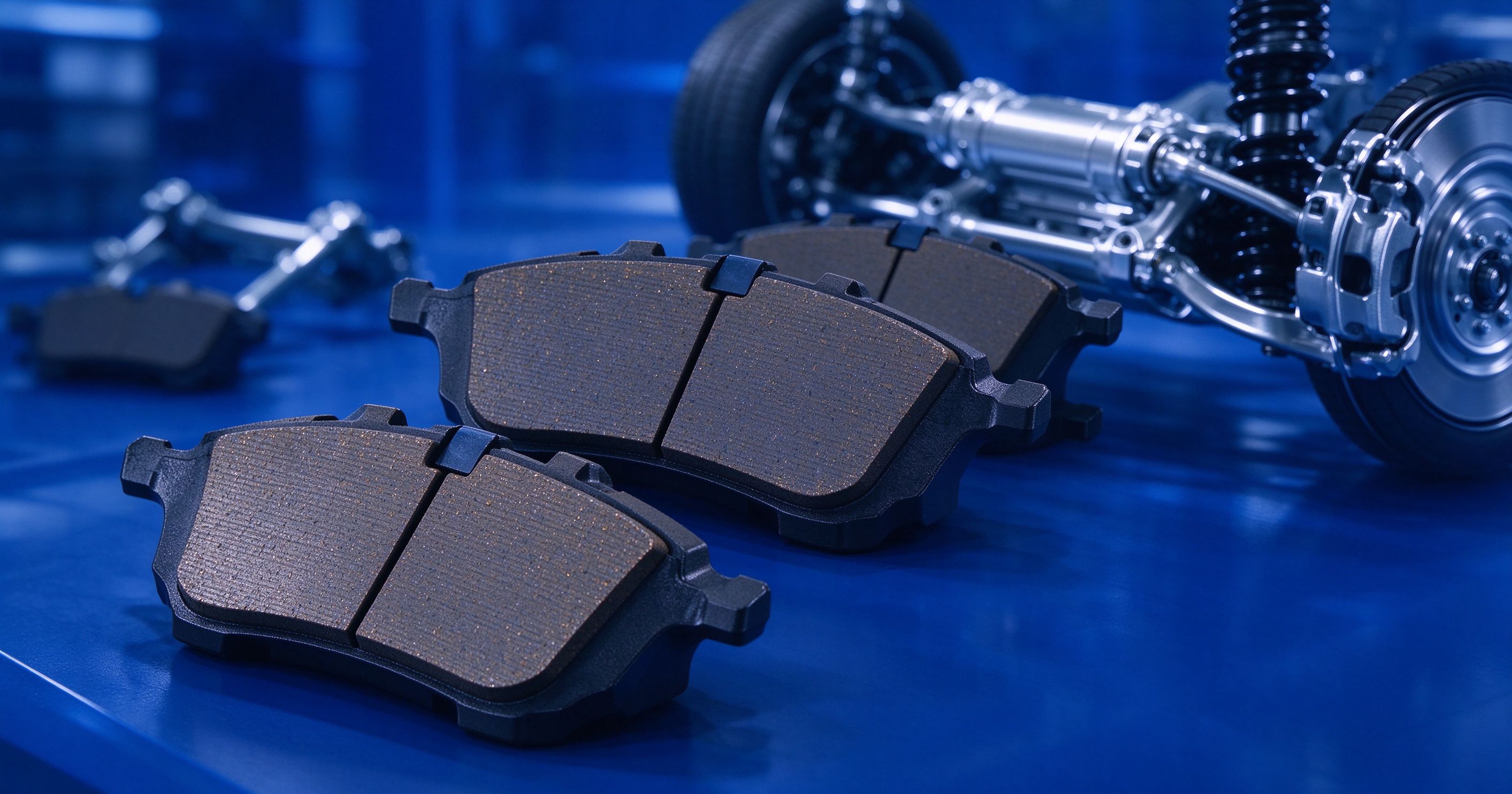
An auto parts factory in Hebei Cangzhou was established in 2018. It mainly specializes in chassis parts such as brake pads and suspension systems. It has long supplied domestic auto parts wholesalers and repair shops. The production line and technology have been running smoothly, and there is still surplus production capacity. However, competition in the domestic auto parts market is fierce, prices are getting lower year by year, and gross profit continues to be compressed. The reason why the boss wants to do the aftermarket in Europe and the United States is very direct: Europe and the United States have a large number of cars, a long age of cars, and a stable demand for after-sales parts. Brake pads and chassis parts are perennial consumables, and wholesalers pay more attention to stable supply and batch consistency., rather than blindly lowering prices. The problem is that the factory does not have a foreign trade team, nor does it have any overseas customer resources. It is even unclear "where the customers are, who is purchasing, and how much they are purchasing." It belongs to a state of production capacity, products, and no imports.
2. Problem diagnosis: Why does the original path fail?
After entering the market, we first made two rounds of diagnosis and there were three conclusions.
First, the channel opening is too narrow.The factory tried platform channels in the early stage, and after paying, most of the items received were scattered small orders and price comparisons with peers. There were almost no wholesalers with a real stable purchase volume, and the input and output were out of proportion.
Second, the target customer portrait is blurred.The term "European and American auto parts wholesalers" is too crude. The procurement logic of wholesalers, chain repair shops, e-commerce sellers, and secondary distributors is completely different. If you use the same letter to send everyone, the open rate and response rate are very low.
Third, follow up on the fault.Occasionally, overseas customers took the initiative to find the factory, but because no one continued to follow, the response was slow, the language was not smooth, and the quotation was not standardized, and the customer's questions were interrupted after two rounds.
Summary in one sentence: It's not that the product is not good, but that the link from "who to find" to "how to continue to follow" has not been established at all.
3. What have we done?
Focusing on these three points, we have done four things. The core is to simultaneously solve "let customers find us" and "let us find customers."
1. Deploy the Dual-Track Customer Acquisition system to translate product language into purchasing language
Import product keywords such as brake pads and chassis parts, and expand the expression methods actually used by the purchaser, such as model adaptation, material specifications, and certification requirements. The value of this step is that factories are accustomed to using craft terms to describe products, while overseas wholesalers are accustomed to using suitable models and standard numbers to search suppliers. The language on both sides is incompatible, and AI is responsible for aligning the two sides.
2. Use customs data to screen "European and American wholesalers" into enforceable lists
Taking actual procurement records in the past six months as a hard condition, we screened European and American auto parts wholesalers who were importing brake pads and chassis parts, and narrowed the list from "looking like customers" to "really spending money to buy similar products." This step directly determines that the subsequent development letter will not be sent in bulk, but targeted and targeted communication.
3. Development letter with 7 to 14-day follow-up sequence
AI generates personalized development letters based on each buyer's product structure and purchasing rhythm to avoid stereotyped self-introduction; at the same time, it configures an automatic follow-up sequence of 7 to 14 days to turn "no reply to the first letter" into a normal part of the process. Link, not a one-time bet.
4. Independent station and multilingual display
Build an independent station to do multi-lingual product display and SEO optimization, so that customers can have a place where they can verify themselves after receiving the development letter-look at the product, look at the specifications, and look at the factory, rather than just relying on a few sentences in the email. Make a judgment.
4. Execution rhythm
Month 1: Build the foundation and pass the first batch of lists
Completed the deployment of the AI extension system and the construction of a product keyword database, launched the independent station, completed the first round of screening of the customs data list and began to release development letters. The focus of this stage is not to issue orders, but to verify which link of "list quality" and "developing information and communication techniques" is lagging behind. I received 9 accurate inquiries that month.
Month 2: Conversation, reaching density
Rewrite the structure of the development letter based on the first round of responses, change the focus from "Who are we" to "What procurement problems can we solve for you", and expand the list volume. Enquiries began to accelerate significantly, with 18 in the month, and the first transaction occurred this month, with an amount of US$125,000.
Month 3: Close up the order and do repurchase design
There were 25 inquiries in the month, and customers who had chatted in the previous two months but had not completed transactions were reactivated at the same time. A total of 52 precise inquiries and 8 transaction orders were received in three months. More importantly, we start to design repurchase purchases for customers that have already been sold-not waiting for customers to come again, but aligning the replenishment cycle, common specifications, and stocking pace in advance.
V. Outcome data
- Accurate overseas inquiries:of 52(9 in the first month, 18 in the second month, and 25 in the third month)
- Transaction order:of 8, first order amountof $125,000
- Customer repurchase rate:35%, among them2 customersBecome a long-term customer of the year
- Average monthly visits to independent stations:1200+, Google keyword ranking enteredtop 10
It should be noted that the above is the actual caliber in this case. The inquiry conversion cycles for different products and different target markets vary greatly and cannot be simply applied to situations other than here.
From the perspective of input-output, the real turning point in this case occurred in the second month: when the development letter was changed from "introducing the factory" to "responding to the purchaser's questions", the improvement in the quality of the reply directly led to an increase in the number of inquiries. This shows that in categories where there is little difference in after-sales products such as auto parts, whoever can appear in the buyer's vision earlier and more accurately will be more likely to get the opportunity to be compared.
6. Which factories can this method be replicated to?
The ones with strong adaptability of this method are factories with "highly standardized products, vulnerable parts or consumables, and stable repurchase by overseas wholesalers," such as after-sales parts for auto parts, hardware tools, rubber and plastic parts, packaging consumables, general machinery parts. Their common characteristics are that customers do not need deep customization, and procurement decisions rely on specifications, certification, price and delivery dates, rather than long-term project run-in. Conversely, if it is highly customized heavy equipment that requires a large amount of money in a single transaction, and requires on-site technical solutions, this road will still be available, but the pace will be much slower. It relies more on the preparation of technical materials and the depth of customer back-tuning, and cannot be expected to take three months. Starting quantity.
7. Common questions
Q: Without a foreign trade team, can we directly rely on AI to build customers?
A: The factory in this case does not have a foreign trade team, and it started with an internal person cooperating with the follow-up sequence. But the division of labor must be clarified: AI is responsible for "finding people" and "chatting up the conversation", and people still need to judge and make decisions on quotations, proofing, and contract confirmation. To put it more accurately, AI lowers the threshold for foreign trade, not completely replaces people.
Q: Can all the lists sifted through customs data be concluded?
A: No. Its role is to increase the hit rate and divert resources from the wide net to the right people. In this case, 52 inquiries correspond to 8 transaction orders, and the conversion process still relies on the comprehensive victory of products, quotations and delivery dates.
Q: Which is more worth investing first, independent station or development letter?
A: The two are a set of cooperation. The development letter is responsible for calling people, and the independent station is responsible for making people trust. In this case, we first set up independent stations and do basic SEO, so that customers have a place to read when the development letter is sent, and the quality of the reply will be higher. If you only do one of them, the ceiling of the effect will appear quickly.
