Core conclusions:In the first half of 2026, my country's cross-border e-commerce import and export volume reached 1.45 trillion yuan, driving employment of more than 10 million people. The AI application rate of cross-border e-commerce companies has exceeded 60%(institutional estimates). Therefore, the answer to the question "Is there any window for the factory to do cross-border?" is: the overall window is still open, but the rules at the door have changed-the penetration rate of "cross-border e-commerce +AI" continues to increase, whether it can enter, It is no longer whether there are channels, but whether there are tools and product power.
Market data also provides support. Data released by General Administration of Customs of China on September 8 showed that in the first eight months of 2026, my country's import and export of goods trade was 34.78 trillion yuan, a year-on-year increase of 17.6%, of which exports were 20.17 trillion yuan, an increase of 14.6%; the import and export of private enterprises was 19.79 trillion yuan, an increase of 17.6%, accounting for 56.9%. The 1.45 trillion yuan of cross-border e-commerce is a new channel growing on this growth curve. The above data comes fromThe Ministry of Commerce held the press conference of the State Council Information Office on September 18withGeneral Administration of Customs of China.
1. Break this set of numbers into three levels
- Scale level:In the first half of the year, cross-border e-commerce imports and exports were 1.45 trillion yuan, and the market itself is still expanding.
- Employment level:It has created more than 10 million jobs, which shows that the upstream and downstream chains are long enough, and people are working on freight forwarding, overseas warehouses, payment, and agency operations.
- Tool layer:The AI application rate of cross-border e-commerce companies exceeds 60%, which means that more than half of their peers are already working with tools.
Among the three floors, the one that is most practical to the factory is the third floor. The first two levels indicate that this business has been established, and the third level indicates that the gameplay of this business has been upgraded. If we still use the same method as three years ago-waiting for inquiries, issuing quotations, and fighting for low prices-we face opponents who have already used AI to select and launch products, the gap in customer acquisition costs will widen and widen.
2. See cross-border chassis data with one table
| indicators | latest data | Source or description |
|---|---|---|
| Cross-border e-commerce import and export in the first half of the year | 1.45 trillion Yuan | Press conference of the State Council Information Office of the Ministry of Commerce |
| Cross-border e-commerce drives employment | More than 10 million people | Press conference of the State Council Information Office of the Ministry of Commerce |
| AI application rate of cross-border e-commerce enterprises | More than 60% | institutional estimates |
| Import and export of goods trade in the first 8 months | 34.78 trillion yuan, a year-on-year increase of 17.6% | General Administration of Customs of China |
| import and export of private enterprises | 19.79 trillion yuan, an increase of 17.6% | Accounting for 56.9% of the total foreign trade value |
Compare the figures between the outside and the outside: the market is growing, private enterprises contribute more than half, and more than half of the AI allocation on the cross-border line has been completed. For factories, the question has changed from "whether to do it" to "with what efficiency."
3. The AI application rate exceeds 60%. What has changed?
In the past, cross-border competition was about who had goods and who could get platform traffic; now the competition is about who can turn an inquiry into an order at a lower cost.
- Selection process:Using data to see changes in demand in the target market is more controllable than relying on experience, and the cost of trial and error is lower.
- Content link:Multi-language product pages, development letters, Short Video scripts, batch generation and batch testing are already routine operations.
- Customer Service and After-Sales:The time difference was filled in by tools, and the response time of overseas buyers was reduced from hours to minutes.
What it means for the factory: There is no need to install the system in one step. First, replace the most labor-consuming link, which is usually customer screening and development letter writing. This is the most labor-consuming part and the easiest to standardize. The difference in human efficiency can be seen in two or three months.
4. Product signals given by the 140th Canton Fair
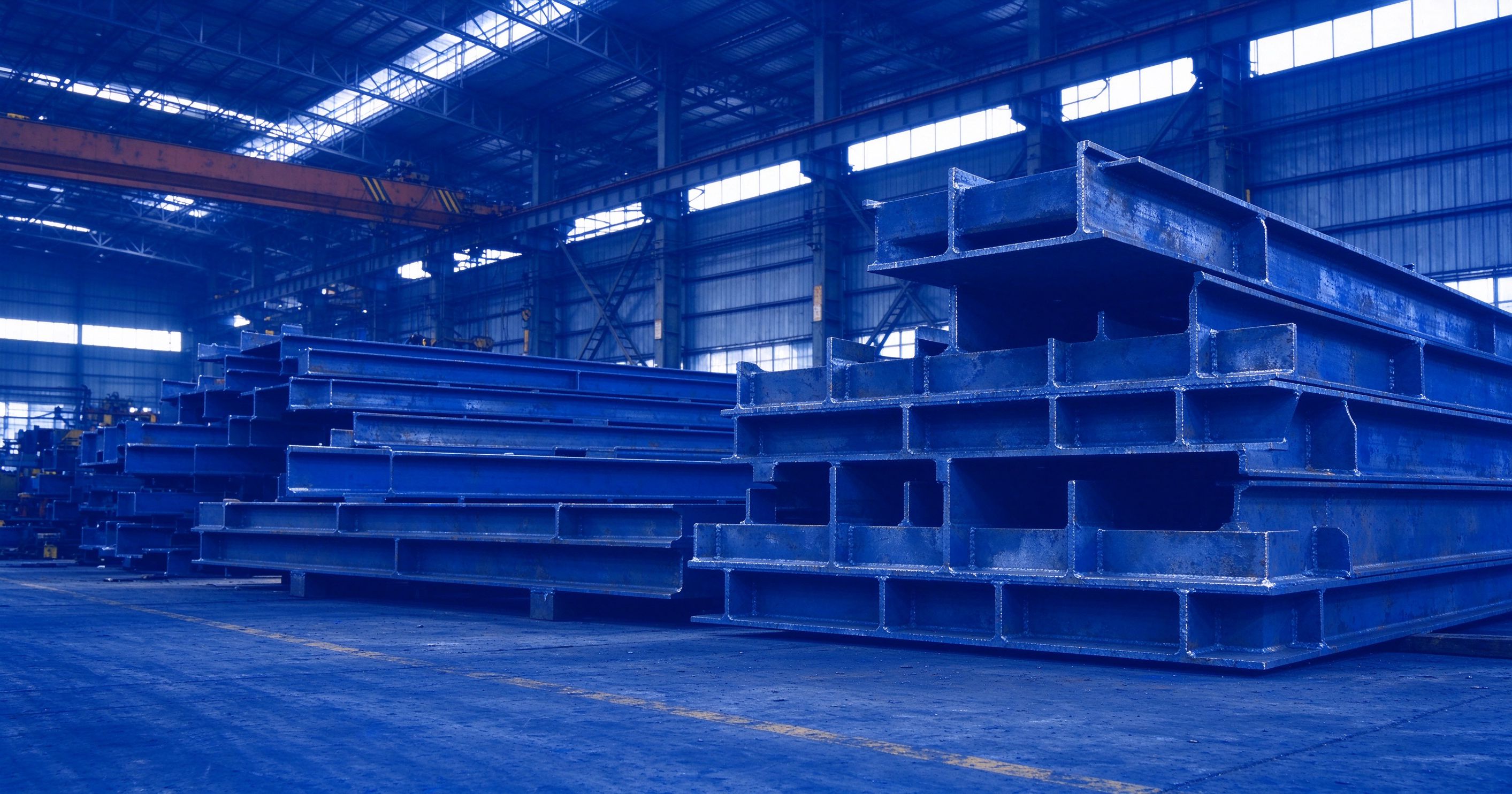
At the 140th QHG 0Q, green products accounted for 26% and new products accounted for 23.2%, both reaching record highs;64% of exhibitors have integrated the industrial Internet and AI into the production and supply chain (Source:QHG 0Q related reports)。
It is worth noting that new products account for 23.2%-nearly a quarter of the exhibits are new. The first thing overseas buyers ask at the booth is increasingly,"How is this different from last year?" If the factory does not update its product structure for two years, it will be difficult to obtain good display positions and quotation space in cross-border channels.
5. Three postures for factories to cut across borders
Posture 1: Supply model.Do OEM and ODM for mature cross-border sellers or brands. The lowest threshold and the fastest effect are achieved. The price is thin profits and weak bargaining power. It is suitable to test the water first and find out the real overseas demand.
Posture 2: Platform self-operation.I open stores on cross-border platforms and directly face consumers and small B customers. The profit margin is large, but you have to bear the risks of product selection, operation, after-sales and inventory. It is suitable for factories with stable production capacity and can accept upfront investment.
Posture 3: Independent station plus direct sales.Build independent stations for small and medium-sized overseas buyers, and use development information and social media to reach out. The cycle is the longest, but the customer's assets are accumulated in your own hands and the repurchase is the most stable. It is a long-term approach.
The three paths are not mutually exclusive. The actual practice of most factories is to first use the supply model to run orders and cash flow, and simultaneously use independent stations to accumulate their own customer lists.
6. Three risk points to avoid before entering
- Qualification review of U.S. importers has been tightened.The United States has strictly investigated the qualifications of IOR importers since September 18. If the information on Form 5106 is inaccurate, it will be directly invalid and numbered. Factories traveling on the U.S. route must confirm that the importer qualifications of the partner are consistent with the declaration information, otherwise the goods may not be cleared after arriving at the port.
- EU tariff costs.The EU's countervailing duties of 7.8% to 35.3% on pure electric vehicles on China have taken effect. For factories in related categories, tax changes must be factored into the cost structure when quoting, and do not accept new orders at old prices.
- The channel is too single.Pressure all production capacity on one platform or one market, and once the policy changes, we will have to find customers again. It is recommended to maintain at least two markets and two channels in parallel.
7. Three issues that factory owners are most concerned about
Question 1: Without an operation team, can the factory do its own cross-border?
Yes, but you have to choose the right starting point. The AI application rate of cross-border e-commerce companies has exceeded 60%. The tool itself has lowered the operating threshold a lot. What is really lacking is often not operational capabilities, but product definitions and overseas demand judgments. It is recommended to start from the supply model first, use one to two quarters to find out the order structure, and then decide whether to build a team.
Question 2: Can small factories share the 1.45 trillion yuan market?
Divide, but choose subdivision. In the first half of the year, cross-border e-commerce reached 1.45 trillion yuan, creating jobs for more than 10 million people, indicating that there are both sold well and small factories in this pool. The opportunities for small factories are not in price comparisons of standard products, but in terms of short delivery times, ability to change funds, and ability to undertake subdivided orders for small batch customization.
Question 3: Now invest in AI tools, how long will it take to see the results?
It depends on which link it is used. When used in customer screening and development letters, changes in the number of customers reached per capita can usually be seen in a month or two; when used in supply chain scheduling and inventory forecasting, the recycling cycle is longer, and internal data needs to be sorted out first. It is recommended to first select one link for a small-scale pilot and use actual data to decide whether to expand.
8. Conclusion and action recommendations
With a scale of 1.45 trillion yuan, employment of more than 10 million people, and an AI application rate of more than 60%, these three figures spell out a market that has matured but is still rapidly upgrading. For factories, the biggest risk is not that "it's too late to do it now", but that it is using the old way to build new markets-using manual screening of customers, using experience to gamble on selecting products, and exchanging low prices for orders. These three things are today It is difficult to make profits again. One thing you can do today: reorder existing products according to "changes in overseas demand", select the three ones that are most likely to go global, and then decide what channels to use to promote. If you want to evaluate your factory's overseas plans, you can contact Qihang AI (telephone 180-0327-6609).
This article was written by Qihang Zhilian Trade Research Institute and was released on September 25, 2026. The data is as of the latest release of General Administration of Customs of China.
